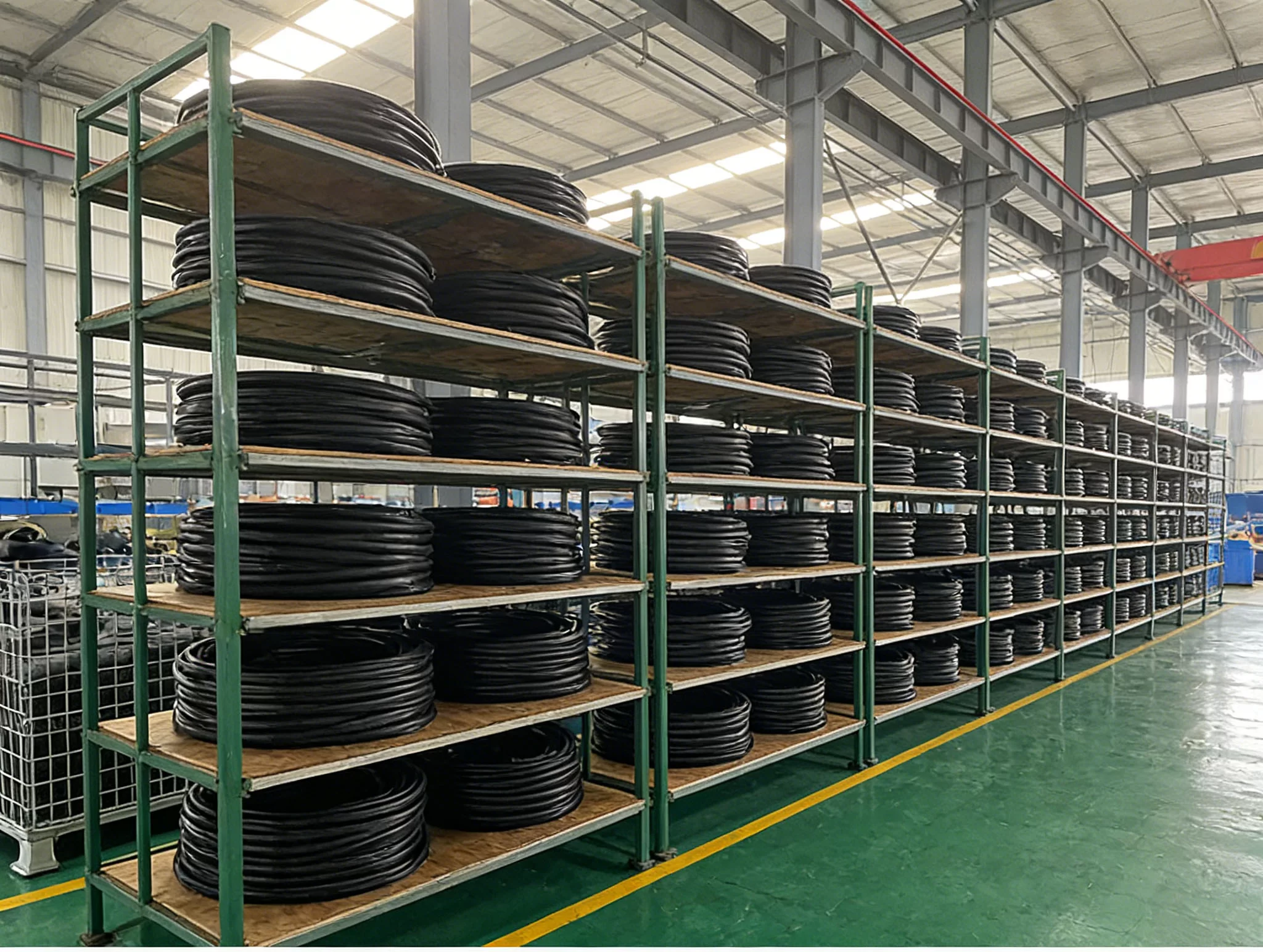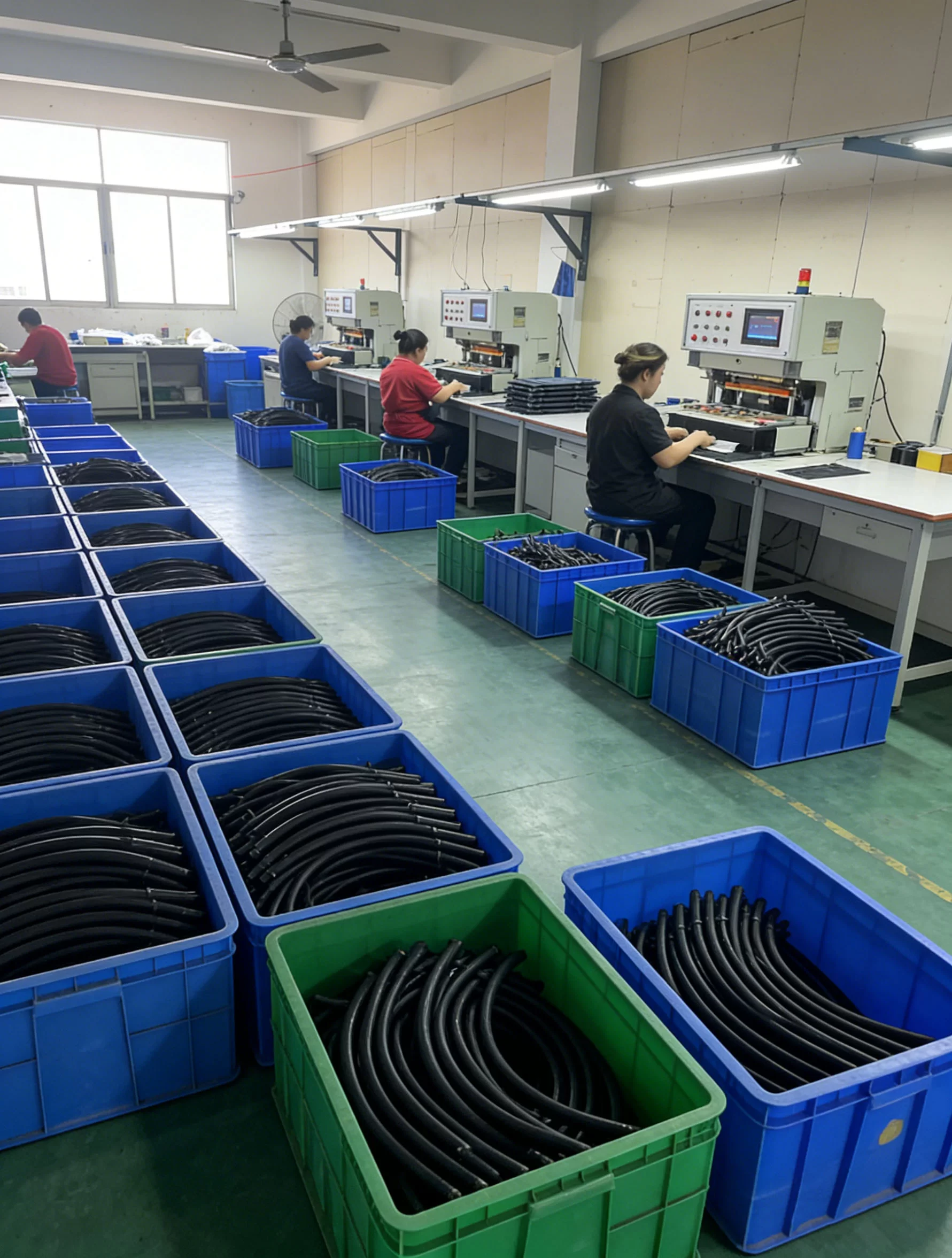

Sometimes, you need a custom silicone hose for a specialized application where a standard hose won’t do the job. Here’s a quick guide to making your own custom silicone hoses:
●1. Designing the Mandrel: Making custom hoses starts with specialized tooling. A mandrel is made to match the exact specifications of the custom hose and is used to shape the inside diameter of the hose.
●2. Extrusion and Reinforcement: Once the mandrel is ready, the silicone compound is extruded over the mandrel. Any necessary reinforcement is added. Reinforcement layers are carefully chosen based on the hose’s intended application.
●3. Curing and Finishing: After the extrusion and reinforcement are complete, the custom hose is cured to lock in its shape. The hose is then trimmed and inspected to make sure it meets all design specifications and quality standards.
●4. Testing: Custom hoses go through rigorous testing to make sure they can handle the pressures and temperatures of their specific applications.
Some common custom silicone hoses are:
●Intercooler hoses: For cars.
●Coolant hoses: For high-temperature systems.
●Medical-grade hoses: Can be customized for biocompatibility and sterility.
How Are Silicone Hoses Tested for Quality?
Testing is a very important part of making silicone hoses to make sure they are up to industry standards and will work well. Manufacturers will usually do a variety of tests, including:
●Burst pressure testing: Make sure the hose can take a lot of pressure without blowing up. This is especially important for automotive and industrial hoses that work under extreme conditions.
●Elongation testing: Measures how much a hose can stretch before it breaks. This is important for applications that need a lot of flex.
●Heat resistance testing: Proves that the hose can keep its properties at high temperatures. This is important in applications like turbochargers and industrial machinery.
●Compression testing: Makes sure the hose can handle internal pressure without collapsing or getting squished.
For medical-grade silicone hoses, we conduct additional tests, such as sterilization validation and biocompatibility testing, to make sure the hoses are safe for medical use.
Summary
Whether you’re a manufacturer or wholesaler, knowing these key aspects of silicone hose production will help you make better products that meet industry standards and customer expectations.